Level 2 — Understanding Markets
Market capitalisation
4 minute read
Coin price is only half the picture
Illustrative example · not live data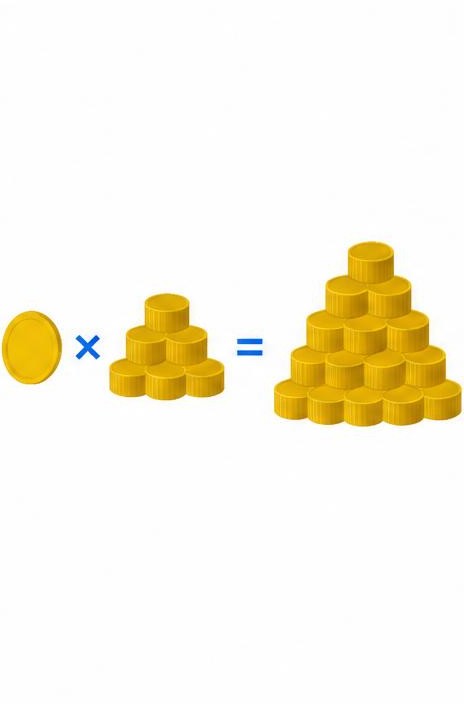
£2 per coin
× 1 million circulating
= £2 million market cap
Market capitalisation ('market cap') is the total value of all a coin's coins: the price multiplied by the number of coins in existence.
It matters more than the price per coin. A coin priced at $0.01 is not 'cheap' if there are a trillion of them — its total value could be enormous. Comparing market caps is the fair way to compare coins.
Large-cap coins (Bitcoin, Ethereum) tend to move more slowly and steadily. Small-cap coins can multiply quickly but can also collapse just as fast — and are easier for big players to manipulate.
You'll see total market cap and Bitcoin's share of it ('dominance') on this site's homepage. When Bitcoin dominance rises, money is flowing to safety; when it falls, traders are taking risks on smaller coins.
Key points to remember
- Market cap = price × number of coins
- Compare coins by market cap, not coin price
- Big caps are steadier; small caps are wilder
- Bitcoin dominance shows the market's mood