Level 1 — Understanding Crypto
What is Bitcoin?
4 minute read
Digital money, shared records
Illustrative example · not live data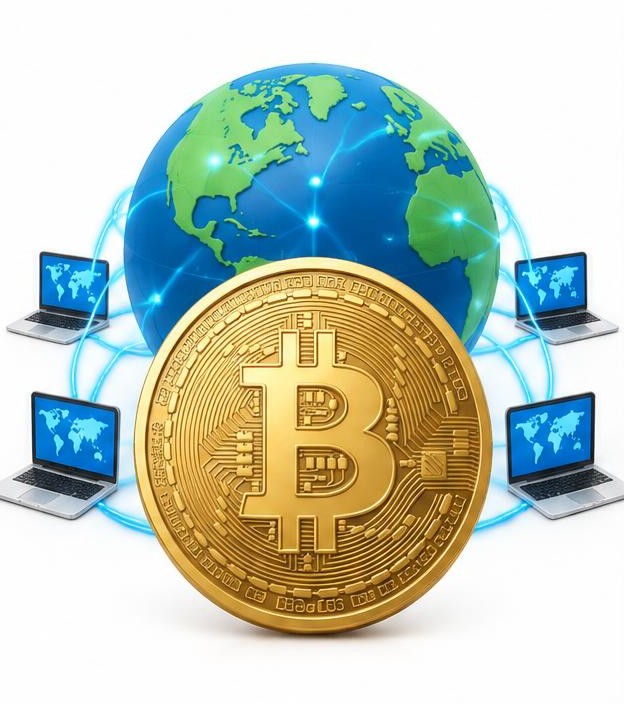
You send Bitcoin
The network checks it
The shared record updates
Bitcoin is digital money that isn't controlled by any bank or government. It was created in 2009 by a person (or group) using the name Satoshi Nakamoto, after the financial crisis shook trust in banks.
Instead of a bank keeping track of who owns what, Bitcoin uses a public record shared across thousands of computers worldwide. No single party can change it, print more of it, or freeze your account.
There will only ever be 21 million bitcoins. That fixed supply is why people compare it to gold — it's scarce, and no government can create more of it.
People buy Bitcoin for different reasons: some see it as a long-term store of value ('digital gold'), some use it to send money across borders cheaply, and some trade it hoping the price rises.
Key points to remember
- Digital money with no bank or government in charge
- A public record keeps track of every coin
- Only 21 million will ever exist
- Often compared to gold because it's scarce